For thirty years, global payment infrastructure lived comfortably within engineering whitepapers and standards committees. Today, the emergence of autonomous consumer commerce demands a unified framework that can seamlessly process both legacy card authorization loops and data-dense banking messaging layers simultaneously.
The Protocol Paradigm: Moving Beyond Standard APIs
In modern financial engineering, professionals often mistake an Application Programming Interface (API) for a core protocol. While an API is an implementation detail defining how one specific system exposes internal functionality, a protocol represents a universal multi-party agreement dictating how completely independent networks communicate, regardless of their underlying database structures.
This operational layout becomes non-negotiable as autonomous digital agents replace traditional human mouse clicks at checkout interfaces. Traditional merchant APIs look for human browser flags and biometric indicators to confirm authorization. When an agent initiates an unstructured multi-step purchase query while its user is asleep, infrastructure integrity can only be maintained by passing cryptographically signed intent mandates down through specialized, structured communication layers.
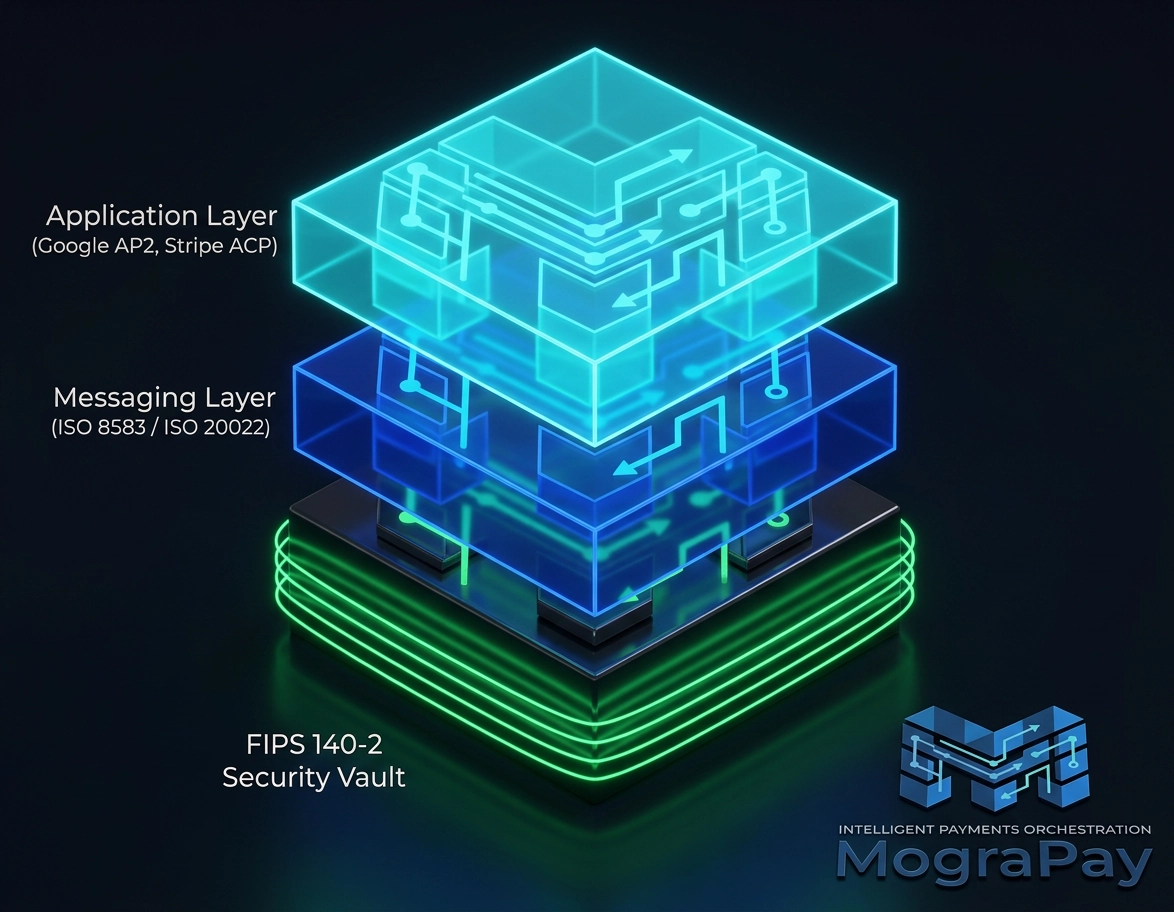
Technical Layout: The Protocol Layer Cake Stack
Visualizing the transaction mapping architecture showing application-level agent parameters running cleanly on top of underlying transport and encryption protocol blocks.
MograPay - Protocol Stack
ISO 8583: The Pack String of Card Networks
Published originally in 1987, ISO 8583 serves as the international standard text blueprint handling credit card processing across global payment processors, card networks, and issuing bank cores. Because it was engineered to perform over low-bandwidth telephone lines, an ISO 8583 message string acts like highly compressed, dense luggage.
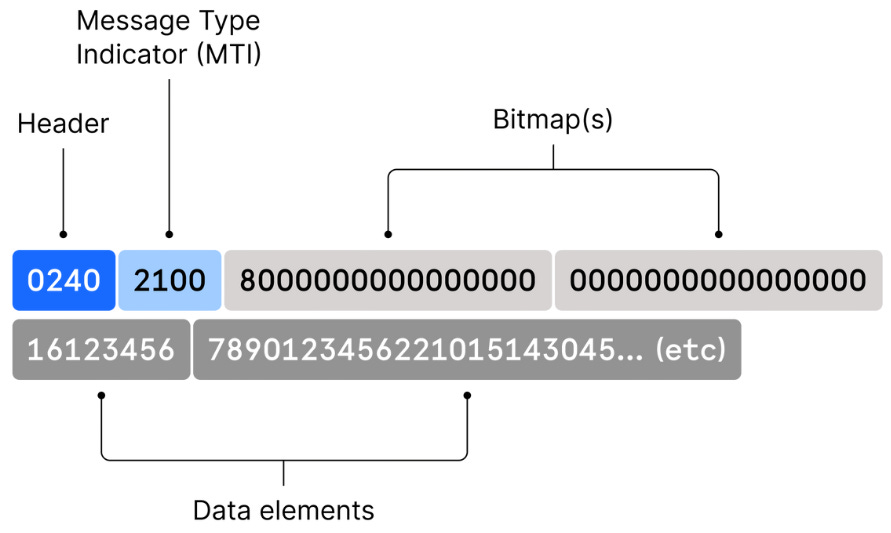
Every transaction authorization payload consists of a structured Message Type Indicator (MTI) defining message intent (such as an authorization request or reversal context) followed by a dense checking grid called The Bitmap. The Bitmap uses a series of bits to tell the engine precisely which downstream data fields are packed inside the message string. For example, Field 2 always translates to the Primary Account Number, Field 4 dictates transaction currency amounts, and Field 49 returns specific transaction currency country indices. While incredibly fast and reliable, this string has no capability to transport heavy contextual metadata.
ISO 8583 - Message Format (Card Transactions)
ISO 20022: The Rich Metadata Language of Modern Banking
As clearing architectures transition to real-time clearing networks like FedNow and instant settlement engines, the limits of legacy text packages become apparent. Enter ISO 20022: the modern financial industry data standard engineered using flexible XML and JSON architectures.
ISO 20022 - Message Transport
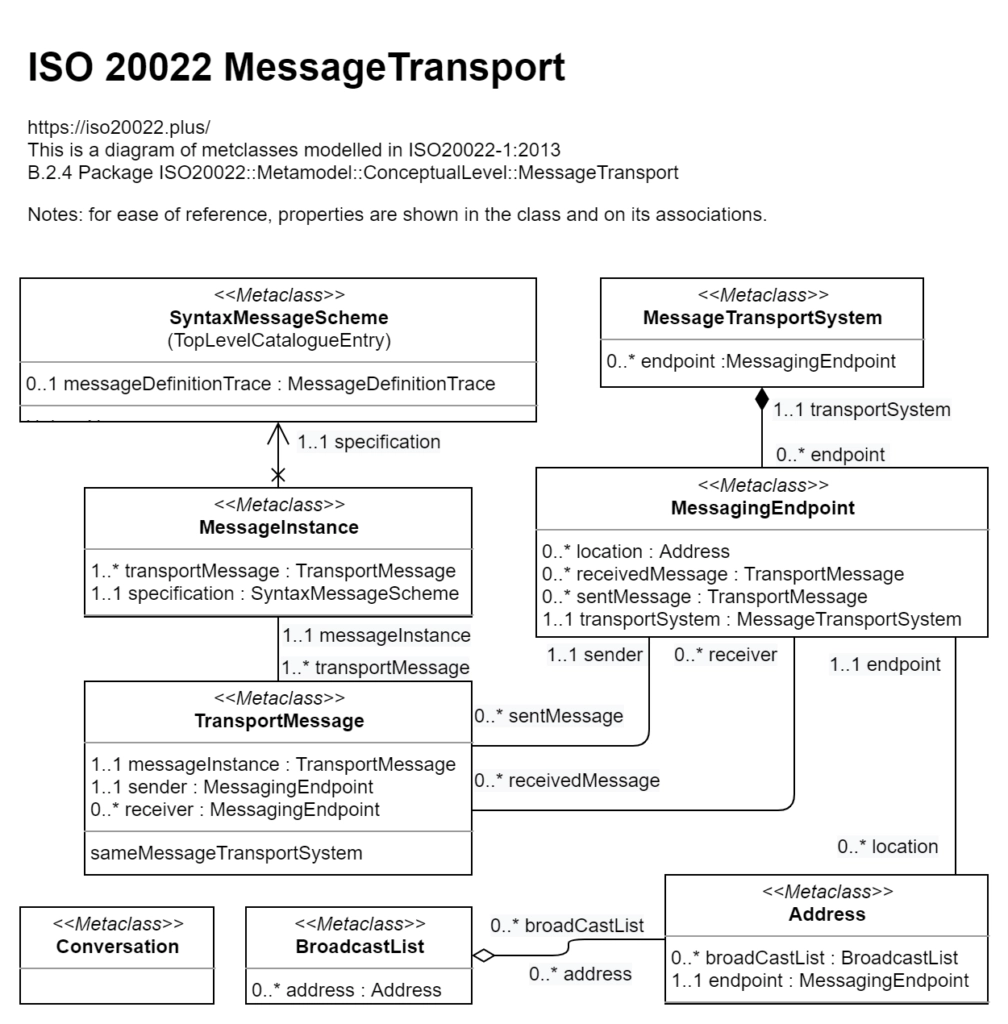
Instead of tracking data strings via numeric bitmaps, ISO 20022 envelopes data variables inside descriptive code hierarchies. This structure enables banks to pass unmatched volumes of operational telemetry along with the money—including complete invoice records, payment tracing IDs, line-item inventory contexts, and structured entity identities. This data richness forms the basis of automated machine learning transaction auditing, allowing platforms to securely isolate fraud indicators before processing clearings.
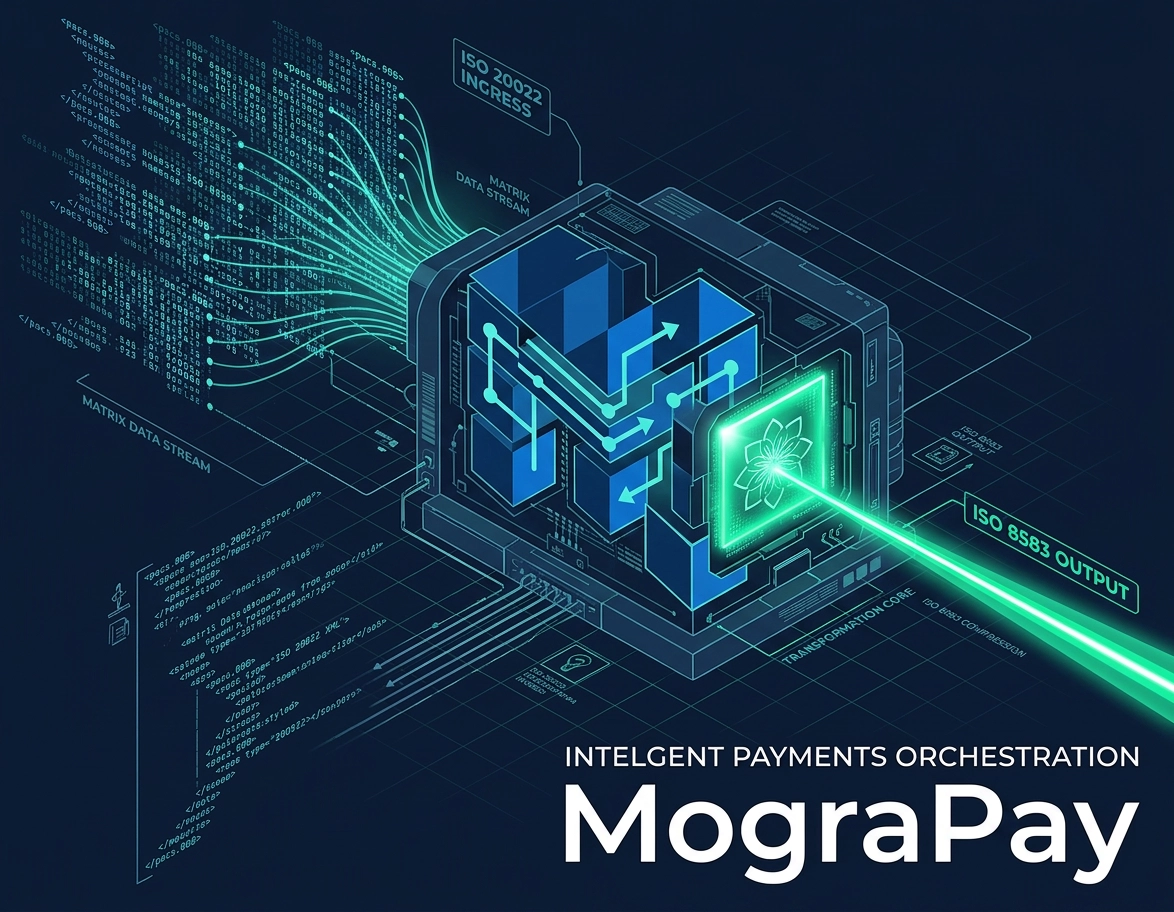
Pipeline Representation: The MograPay Bilingual Translation Switch
Illustrating wire-level message translation, mapping heavy data tags into light credit authorizations at scale while tracking transactional observability.
MograPay - Bilingual Translation Switch
The MograPay Target Architecture: Security and Scale
The true barrier to modernization for enterprise merchant aggregators is the N × M integration nightmare. If every novel transaction channel requires a custom translation adapter for every legacy core bank engine, cost scaling limits adoption. MograPay provides the unified translation infrastructure that resolves this bottleneck.
MograPay integrates structural card parameters and descriptive modern message networks within a high-velocity, real-time loop. Our target environment handles wire routing transformations at an advanced capability scale:
Hardcoded Operational Parameters:
- Throughput Capacity: Running high-velocity transaction switching processing scales topping 6,000+ TPS seamlessly.
- Latency Optimization: Completing card payload tokenization, inline formatting changes, and predictive risk scoring in under 300ms end-to-end latency windows.
- Resiliency Metric: Delivering distributed network failovers to ensure continuous 99.999% uptime runtime availability.
- Data Integrity Standard: Relying on localized cryptographic isolation parameters mapped to FIPS 140-2 guidelines to keep payment details isolated from open agent pools.
By designing a platform that natively speaks any protocol—whether routing card network transactions, validating web bot authenticity tokens, or executing instant bank clearings—MograPay delivers complete transaction intelligence without forcing enterprises to replace their core underlying systems. We establish the rules, compliance moats, and high-performance infrastructure ensuring that global networks stay resilient through the next century of digital commerce.